Plan Review Process Whitepaper
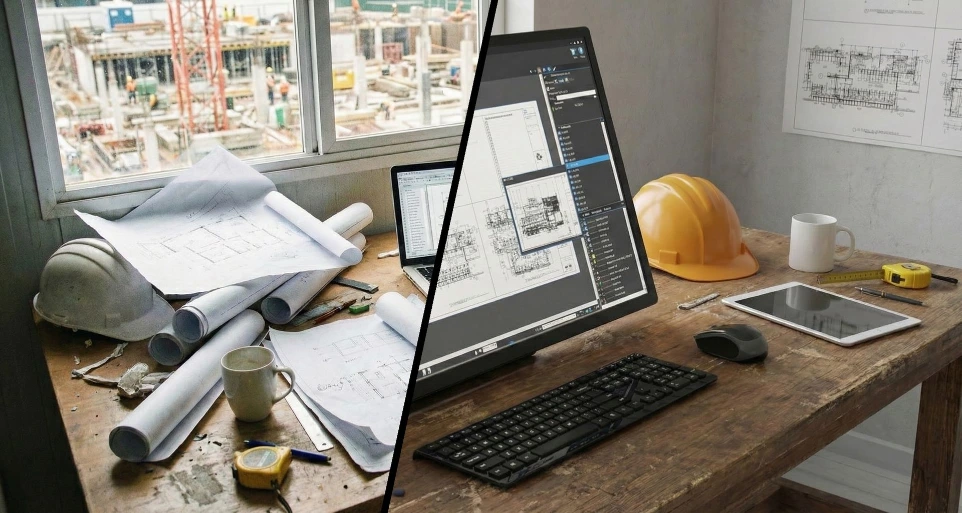
A Framework for Reducing Friction, Risk, and Cost
Aligning the team with the Same Information, Same Interpretation, and Same View.
Construction projects rarely fail outright, but they frequently suffer from cost overruns, friction, and delays that could have been avoided. The whitepaper outlined here offers an approach to keep everyone aligned, helping teams spot problems before they become expensive field rework.
Reduce Ad Hoc Friction: Move away from scattered emails and markups to a structured, repeatable process.
Standardize Visuals: The "Same View" is critical to preventing individuals from missing context on private screens.
Full Lifecycle Coverage: Apply a consistent review thread across all 7 stages, from concept and feasibility to operations and maintenance
Construction Plan Review is the discipline that maintains project alignment by ensuring all stakeholders work from a shared source of truth. This whitepaper provides a "Prepare, Run, Follow Through" framework to reduce RFIs and change orders.
The High Cost of "What Sheet Are You On?"
On most projects, plan review happens constantly, but in a high-risk, fragmented way. Coordination meetings often stumble right out of the gate with the question, "What sheet are you on?" while different versions circulate via email, and field teams inadvertently build from outdated plans. While these issues feel like everyday friction, they carry quantifiable costs that most organizations fail to link back to their review process.
When reviews are informal, small misalignments compound into measurable business impacts, such as schedule slips and reputational risk. A misinterpreted equipment clearance on a small screen can trigger a late-stage RFI, field rework across several rooms, and a week-long delay involving multiple trades. This pain originates from ad hoc habits that can no longer scale with modern project complexity.
What Is Structured Plan Review?
Structured Plan Review is not a single meeting; it is a continuous thread running through the full lifecycle of a project. It is a disciplined methodology designed to make "getting everyone on the same page" operational by enforcing three specific conditions: Same Information (Source of Truth), Same Interpretation (Common Language), and Same View (Visual Clarity). By formalizing this process, Volanti acts as the anchor for the "Digital Jobsite," providing the visual real estate necessary to ensure no detail is missed during these critical alignment sessions.
A Workflow for Every Stage
Plan review must be light enough to flex across the project lifecycle yet structured enough to consistently protect the project's foundations15. This framework applies a consistent logic from the earliest design sketches through to the final handover.
- Early Stage Feasibility: Validate options and constraints during Concept and Schematic Design to ensure viability before heavy resources are committed.
- Design Development Coordination: Resolve clashes and agree on system routes by ensuring all trades are interpreting the drawings exactly the same way.
- Construction & Field Revisions: Manage field changes and resolve inquiries dynamically, ensuring the field team is never building from superseded data.
- Handover & Operations: Finalize accurate as-builts during the closeout phase to ensure the owner receives a reliable digital twin of the facility.
Three Foundations of Alignment
Teams reviewing plans on different devices, or struggling to see details on small laptops or tablets risk not working to the same understanding, they may literally not be on the same page. This lack of visual clarity leads to "Same View" failure, where individuals miss context because they are zoomed in on a private screen rather than looking at a shared master view.
The Volanti approach, detailed in this whitepaper, enforces a "Same View" standard. By utilizing large, ergonomic, sharp displays that show entire sheets without the need for constant zooming, teams ensure that symbols and line types are interpreted consistently. This reduces the risk of disputes arising from disagreements on what was actually agreed upon in review.
Platform Agnostic, Process Specific
A robust plan review process requires a "Source of Truth" platform to ensure everyone pulls from the same location. While the hardware provides the view, the software holds the data.
The List:
- Bluebeam / PDF Viewers: Used for "Live Logging" markups in real-time to avoid separate paper parking lots or side notes.
- Procore / Autodesk Build: Serves as the single agreed-upon environment to hold current drawings and manage version control.
- BIM Coordination Models: Facilitates the "Same View" foundation by ensuring all stakeholders view the master model simultaneously rather than independently navigating.
Deployment for the Digital Jobsite
To achieve the "Same View" standard described in the whitepaper, the viewing environment must be accessible and visible. The Volanti Plan Review Table offers complete versatility, from team presentations and collaboration to personal review and markup. The Volanti Plan Review Tabletop uses existing desk and table space, giving your laptop a large display for reviewing and collaborating on full-size plans.
Whitepaper At A Glance
- Title: Construction Plan Review: Getting Everyone on the Same Page
- Pages: 6
- Publication Date: Dec 6, 2025
- Core Framework: Prepare, Run, Follow Through
- Key Metric: Reduction in RFIs and Change Orders
- Format: PDF Download
- File: Volanti-Construction-Plan-Review Whitepaper-2025-12.pdf
Who is This For
This whitepaper is designed for teams of all sizes looking to reduce friction, cost, and delays caused by simple miscommunication. It is for leaders who realize that long-standing, informal habits for managing drawings are probably costing them money.
The Roles:
- Project Executives: Who need to link RFI and change order metrics back to weaknesses in the plan review process.
- BIM Managers: Who need to enforce a "Source of Truth" and ensure models are not changing silently without clear bulletins.
- Superintendents: Who deal with the fallout of field rework when crews build from outdated or misinterpreted plans.
Process Resilience
Reliability in construction isn't just about hard hats and steel; it's about the durability of your information pipeline. Ad hoc reviews are fragile; they break down under the pressure of compressed schedules and hybrid work.
The framework proposed here is designed to be "contact-resilient." It ensures alignment survives contact with daily work by integrating approved markups into the working set immediately and publishing changes deliberately. This creates a process as durable as the physical build itself.
Ad Hoc vs. Structured Review
See how moving from informal emails to a structured digital workflow transforms project outcomes.
| Feature | Ad Hoc / Informal Review | Structured Digital Framework |
| Source of Truth | Fragmented (Email, Paper, Local Files) | Single Platform (Locked & Labeled) |
| Visual Context | Zoomed-in, Private Screens | "Same View" (Master View for All) |
| Markup Logging | Separate Notes / "Parking Lots" | Live Logging in Real-Time |
| Outcome | RFIs, Rework, Schedule Slips | Clarity, Alignment, Faster Decisions |
Methodology
Implementing a strong plan review process... creates faster, clearer decisions, allowing teams to spend more time building and less time fighting their drawings.
Digital Jobsite Display FAQ
No. Plan review is a continuous thread. It starts at Concept & Feasibility and continues through Construction Documents, all the way to Operations & Maintenance.
You must enforce a "Single Master View" in meetings to prevent independent scrolling and ensure a strict "Source of Truth" platform is locked in before the session begins.
It is a repeatable protocol. You Prepare by defining objectives and views, Run the session with disciplined referencing, and Follow Through by immediately updating the source of truth.
Hardware is one of the three foundations. Displays must be large and sharp enough to show entire sheets to ensure "Visual Clarity" and prevent context loss from constant zooming.
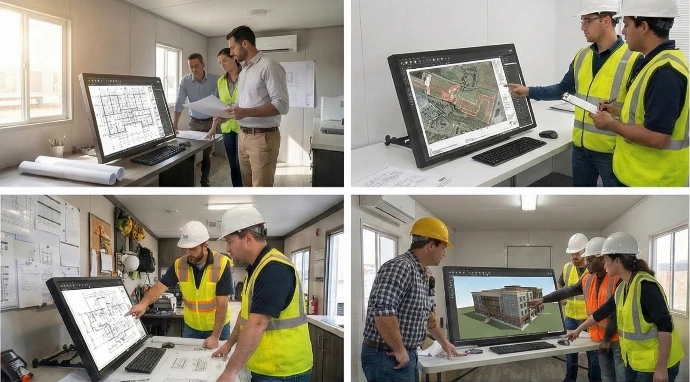
Are You Truly on the Same Page?
If you cannot honestly answer that your team shares the exact same information, interpretation, and view, you know exactly where to improve. Start by piloting this framework on a single coordination cycle. Download the whitepaper today to reduce friction and risk on your next project.
Download (PDF): Volanti-Construction-Plan-Review Whitepaper-2025-12.pdf
This material is provided for informational purposes only and does not constitute design, engineering, or professional advice. Construction projects vary, and organizations should apply their own standards, judgment, and regulatory requirements. Volanti Displays is not responsible for project decisions, outcomes, or compliance actions taken based on this content.
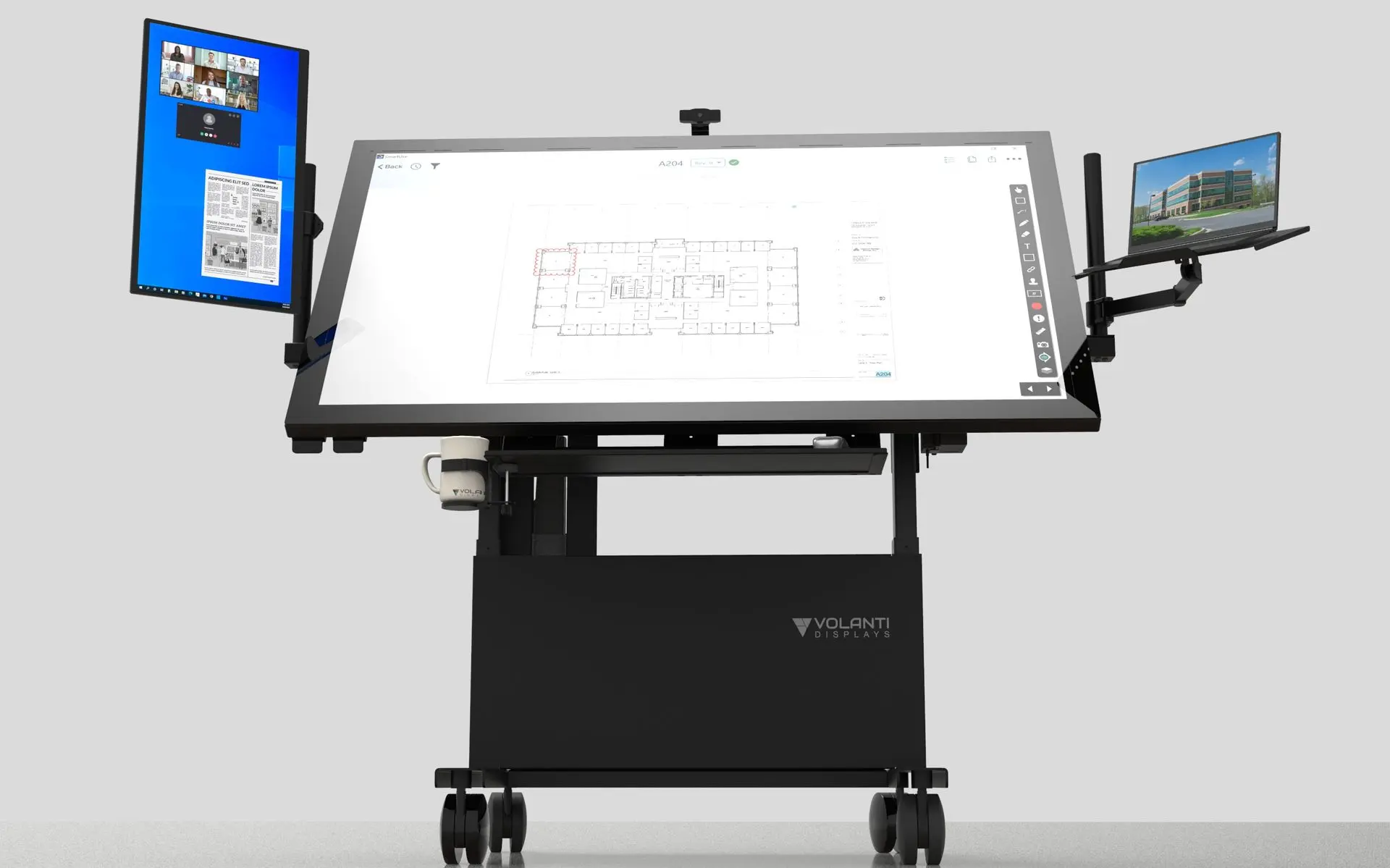
Jobsite Plan Review Table
A full‑size tilt‑adjustable touchscreen plan table for high‑engagement coordination sessions. Perfect for larger trailers, war rooms, and project offices where teams gather around one shared view of drawings, models, and schedules.
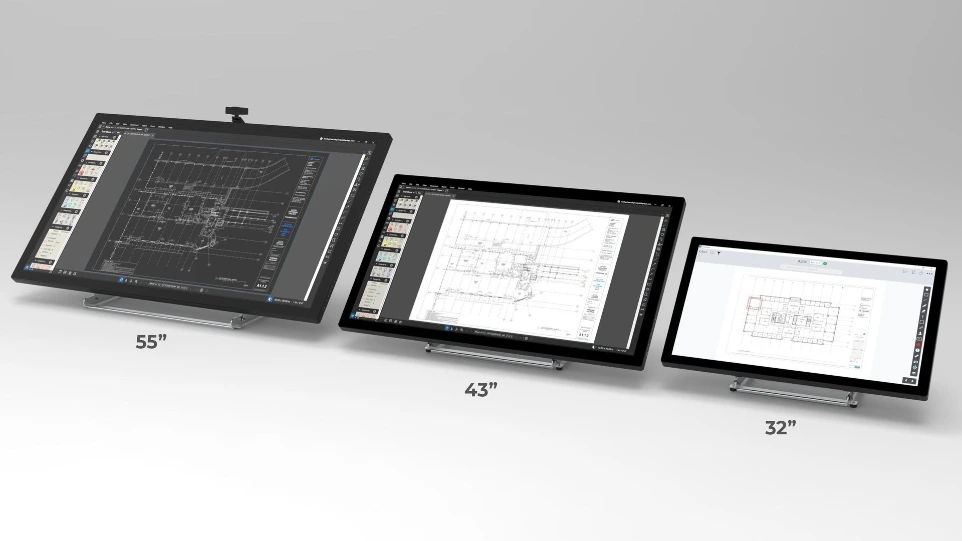
Jobsite Tabletop Plan Display
The Plan Review Tabletop delivers a large 4K touchscreen in a compact footprint that fits standard trailer desks and worktables. It is easy to install, easy to relocate, and ideal for daily huddles, RFIs, and drawing review in jobsite spaces.
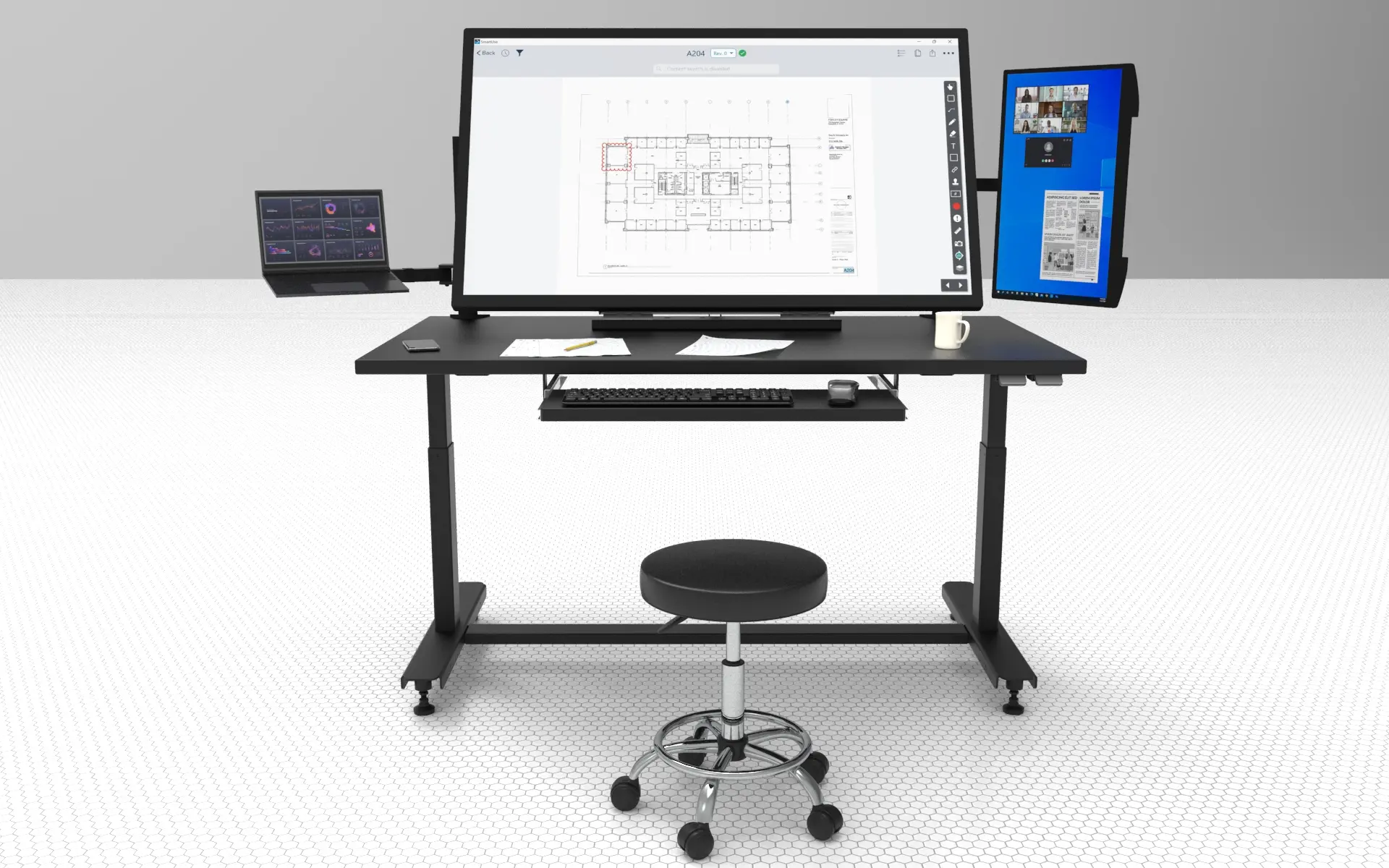
Plan Review Desk
sit‑stand workstation with an integrated touchscreen for supers, project engineers, and coordinators who need a dedicated digital plan station. Keep drawings, RFIs, and dashboards at your fingertips all day while still stepping over to collaborate at the Tabletop or Table.