Optically Bonded Touchscreen Displays for AEC
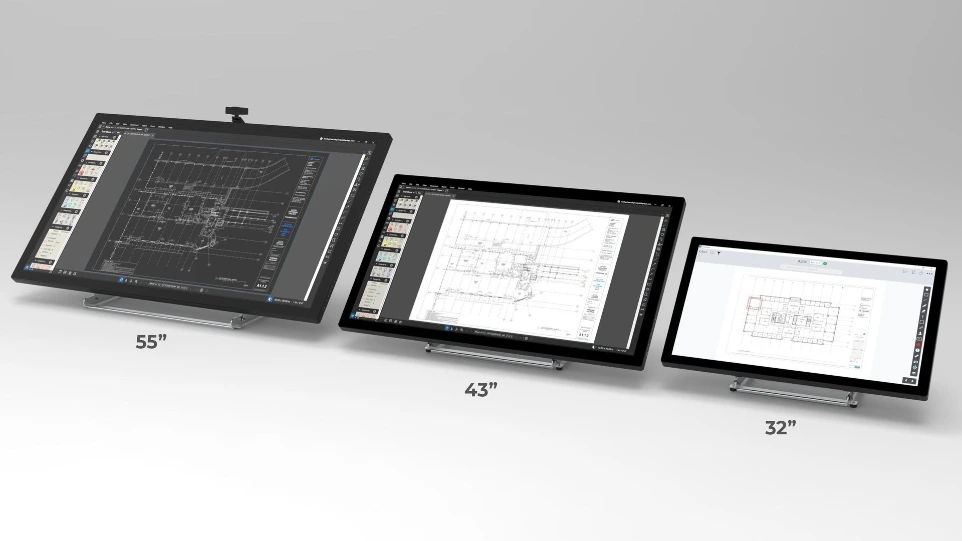
Optically Bonded 4K Displays for Serious Plan Review
Reduce glare, eliminate parallax, and give your teams a display they can trust for six and seven figure decisions.
- Review dense 4K PDFs and BIM views without zoom fatigue or washed-out linework.
- Mark up, measure, and select with pen-point accuracy and minimal parallax.
- Deploy a rugged front surface engineered for trailers, studios, and coordination spaces.
The Problem: Air Gaps That Undermine Plan Review
Most large “touch displays” were never designed for plan review. When a touch layer is added on top of a standard monitor, it leaves an air gap between the glass and the LCD image.
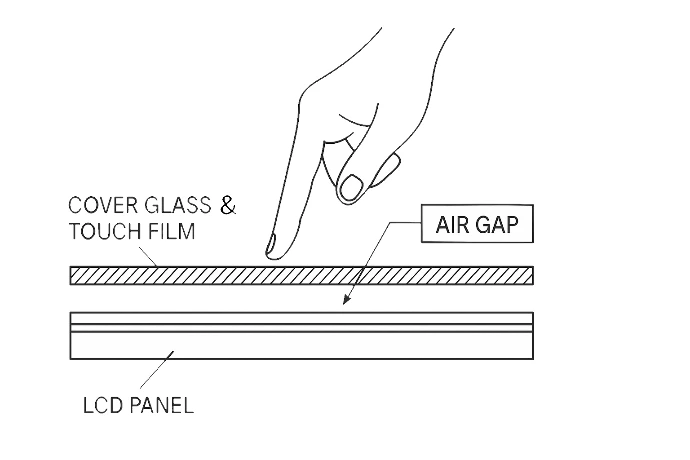
That gap introduces real problems for construction workflows:
More reflections, less contrast
Light bounces between layers, washing out linework and shading, especially in bright rooms.
Parallax error for touch and pen
The cursor appears offset from the pen tip, forcing users to slow down and over-correct.
Dust, moisture, and fogging risks
Air gaps become another place for haze, condensation, or dust to appear.
Weaker mechanical structure
Separate layers flex under load when people lean, write, or rest tools on the surface.
For quick email or slide review, these compromises might pass. For BIM coordination, quantity takeoff, or RFI review, they cost time and increase risk.
The Solution: Direct Optically Bonded Plan Displays
Volanti uses direct optical bonding on its 4K plan review tables and tabletop touchscreen displays to remove the air gap and bring the image as close to the glass surface as possible.
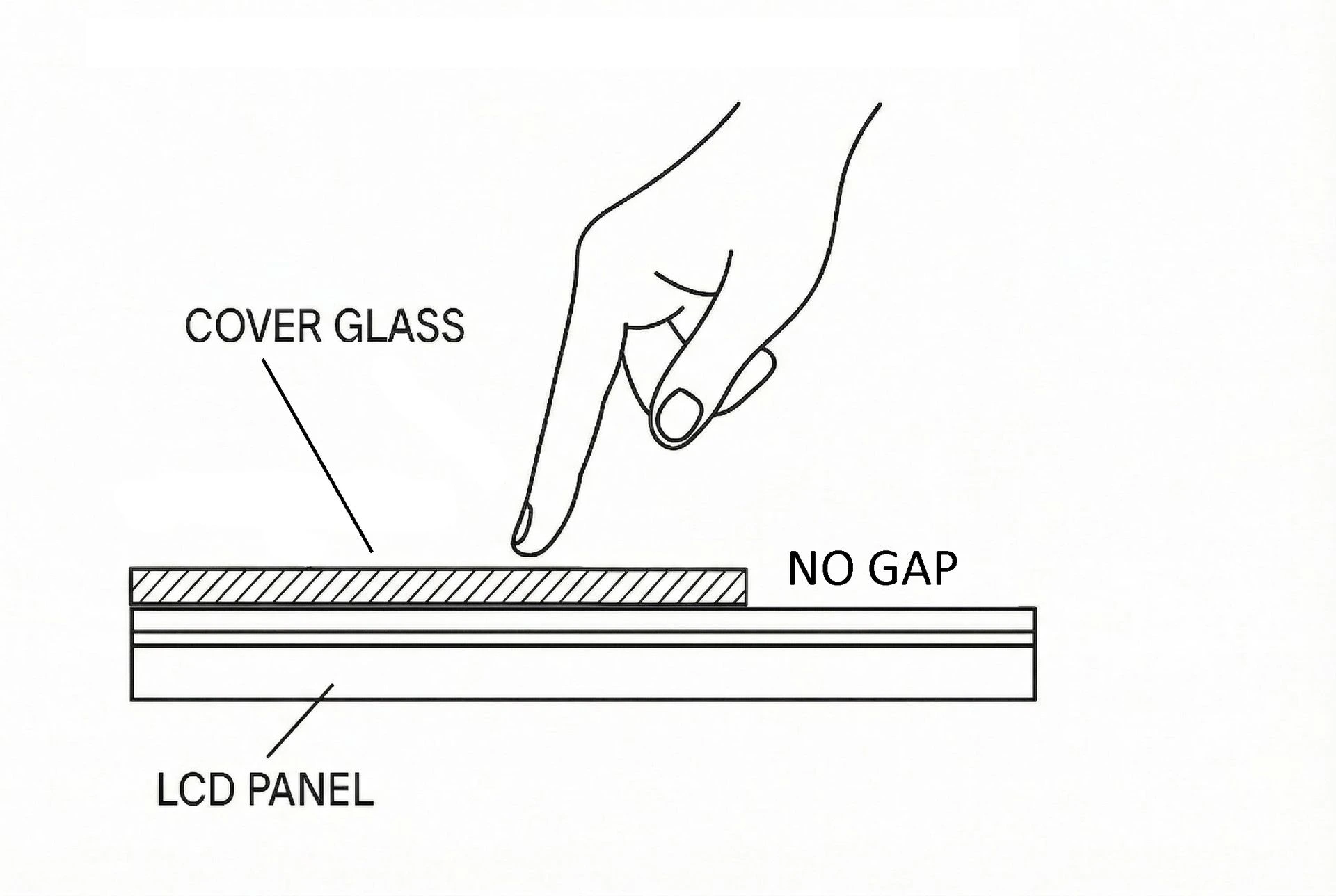
Direct optical bonding:
Minimizes glass-to-image distance so pixels appear at the surface, not “below” the glass.
Reduces internal reflections to improve perceived contrast in real-world lighting.
Cuts parallax so the pen tip and touch point align closely with the pixel selected.
Creates a unified, rigid front surface that stands up to daily plan review and collaboration.
Result: your display stops behaving like a consumer TV with a touch add-on and starts performing like a purpose-built tool for plan-intensive work.
Overlay vs Edge Bonding vs Optical Bonding vs Direct Optical Bonding
Method | Air Gap | Reflections | Parallax | Structural Rigidity | Best For |
Overlay | High | High | High | Low | Low cost retrofits |
Edge Bonding | Medium | Medium | Medium | Medium | General touch displays |
Optical Bonding | Low | Low | Low | High | Professional and control rooms |
Direct Optical Bonding | Minimal | Very Low | Very Low | Very High | Plan review, BIM, digital jobsite |
Clarity, Accuracy, and Durability That Pay for Themselves
Visual Clarity in Real-World Environments
Improve perceived contrast in plans and BIM models.
Reduce mirror-like reflections from overhead lights and windows.
Keep fine hatching, callouts, and color-coded overlays readable without dimming the room.
Result: Faster, more confident decisions on RFIs, design changes, and coordination issues.
Accurate Touch and Pen for Precision Markups
Minimize parallax so markups and measurements land exactly where the pen tip is.
Give users a more natural inking feel with a rigid, non-floating surface.
Maintain accuracy across the entire 4K canvas, not just in the center.
Result: Cleaner markups, fewer mis-clicks in Bluebeam or BIM tools, and less fatigue during long sessions.
Durability for Trailers, Studios, and Coordination Rooms
Create a bonded, unified glass stack that resists flex and daily wear.
Reduce the risk of internal dust or moisture compared to air-gapped assemblies.
Maintain consistent optical performance over time, even with heavy use.
Result: Longer practical life and lower risk of display-driven downtime or field failures.
Better Return on Your Software Investment
You already invest heavily in Bluebeam, BIM platforms, and CDE systems. The display is where all of that becomes usable.
Direct optical bonding helps you:
Shorten coordination and review meetings when everyone can clearly see the same details.
Reduce misinterpretation-driven rework and avoidable RFIs.
Keep teams in a fully digital workflow instead of reverting to printed sets “because they’re easier to read.”
Result: The display becomes a productivity multiplier, not a bottleneck.
Stylus & Optical Bonding
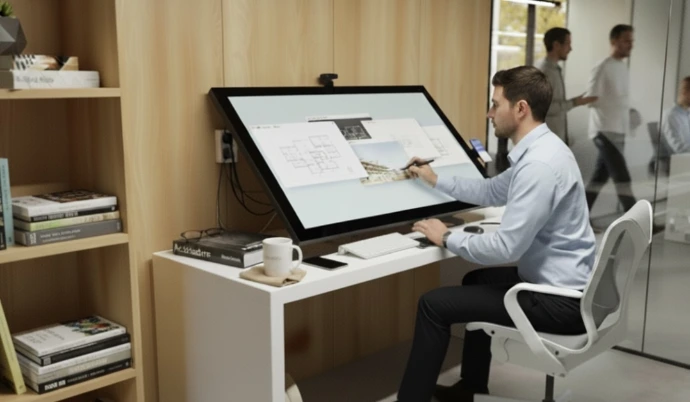
Watch how the stylus tracks precisely on the Volanti direct optically bonded 4K display, with the ink appearing exactly where the tip lands. Minimal parallax and a rigid glass surface make markups, measurements, and symbol placement feel natural and accurate, even at the edges, so your teams can work faster and trust every annotation in Bluebeam and BIM workflows.
Built Specifically for Plan Review and Digital Jobsite Use
Volanti focuses on large-format 4K touch displays designed for AEC plan review, not generic office use.
Our direct optically bonded displays:
Integrate with your existing stack
Optimized for Bluebeam, BIM viewers, CDE platforms, and construction management systems.
Support plan-first workflows
Tabletop and plan review table formats are designed as plan workstations, not presentation screens repurposed for markups.
Balance anti-glare and sharpness
Surface treatments are tuned to reduce reflections without blurring fine drawing details.
Are available in the sizes your teams actually use
From tabletop displays to larger plan review tables and wall-mounted 4K units.
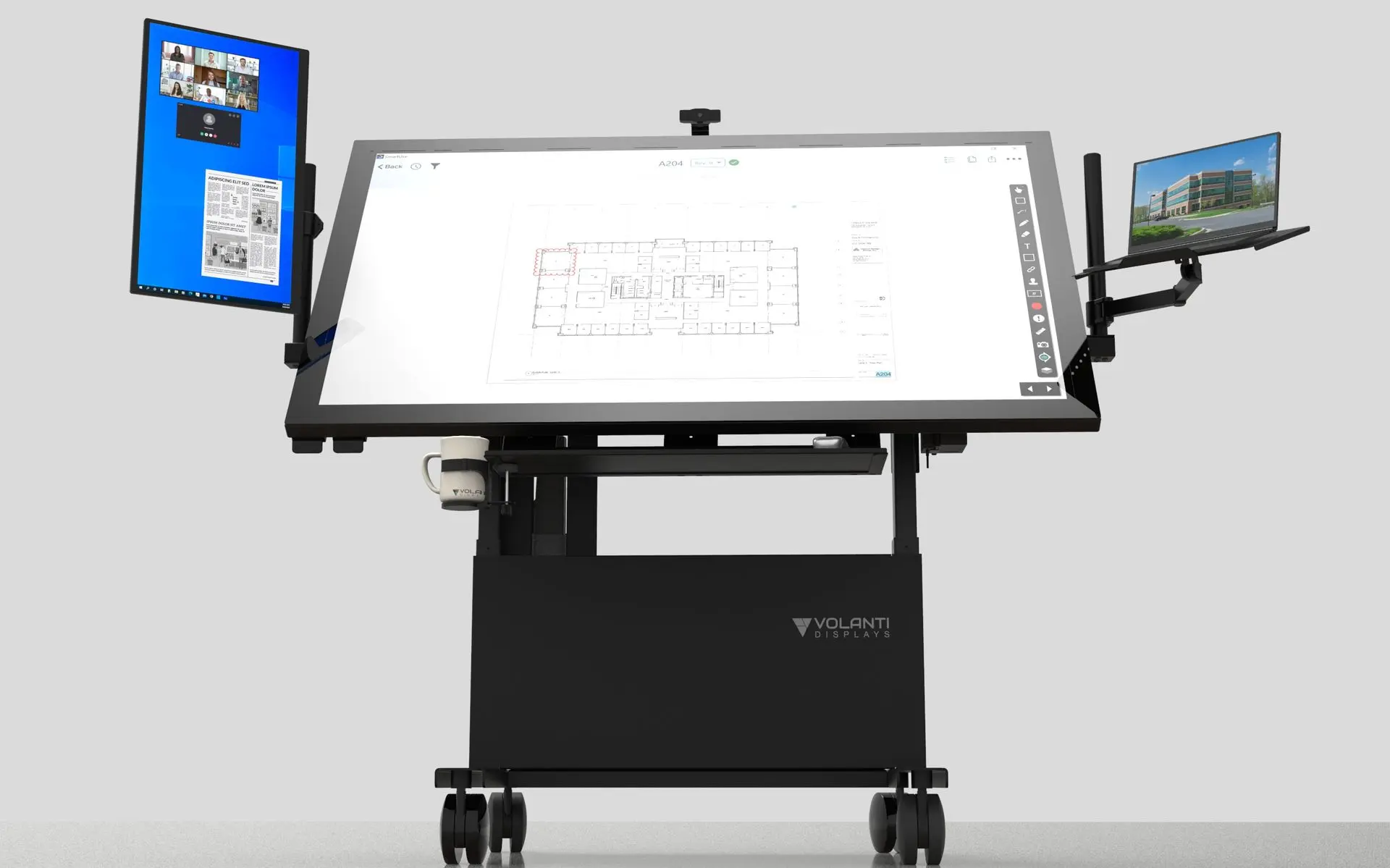
Jobsite Plan Review Table
A full‑size tilt‑adjustable touchscreen plan table for high‑engagement coordination sessions. Perfect for larger trailers, war rooms, and project offices where teams gather around one shared view of drawings, models, and schedules.
Jobsite Tabletop Plan Display
The Plan Review Tabletop delivers a large 4K touchscreen in a compact footprint that fits standard trailer desks and worktables. It is easy to install, easy to relocate, and ideal for daily huddles, RFIs, and drawing review in jobsite spaces.
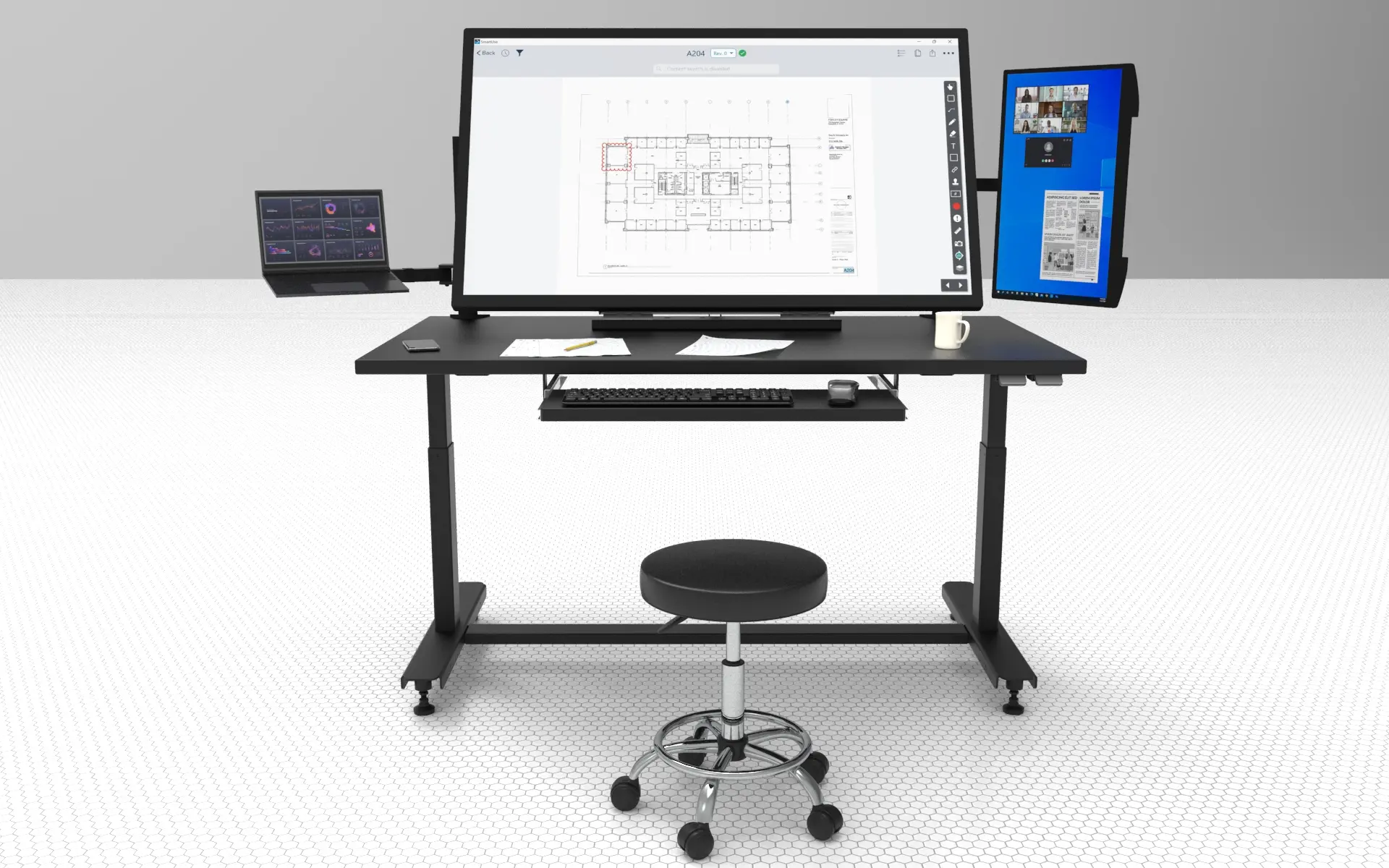
Plan Review Desk
sit‑stand workstation with an integrated touchscreen for supers, project engineers, and coordinators who need a dedicated digital plan station. Keep drawings, RFIs, and dashboards at your fingertips all day while still stepping over to collaborate at the Tabletop or Table.
Digital Jobsite Display FAQ
Overlays and edge-bonded displays leave an air gap between the glass and the LCD image, which increases reflections and parallax. Full optical bonding fills that gap with an optically matched material. Direct optical bonding goes further by bonding to the open-cell LCD glass, minimizing glass-to-image distance and delivering the lowest reflections and parallax.
Yes. Removing the air gap significantly reduces internal reflections, which increases perceived contrast. That makes fine linework and shading easier to read in trailers, glass-front offices, and open studios.
Yes. By bringing the LCD image closer to the surface, optical bonding reduces the visual offset between the pen tip and the pixel selected. Direct optical bonding delivers the lowest parallax of the available methods, which is especially important for precise markups and measurements.
Optical bonding turns the front of the display into a single, rigid structure. That improves resistance to flex and everyday impact when users lean, write, or place tools on the surface, and it reduces the risk of dust or moisture entering between layers.
Like other optically bonded displays, a damaged front glass typically requires factory service to maintain optical quality. However, the bonded construction is more resistant to everyday damage, so most customers see fewer issues over the life of the display compared to unbonded or overlay solutions.
Optical bonding removes one major source of reflection. Volanti then tunes the anti-glare surface to balance reflection control with the need to keep fine drawing details sharp and readable.
Direct optical bonding is available on all Volanti’s plan review tables, tabletop plan displays, and selected wall-mounted 4K models. Your Volanti representative can match the right bonded display to your application.
Next Steps
Make Direct Optical Bonding Your New Standard for Plan Displays
If your teams depend on Bluebeam, BIM, and digital plan workflows, the display should not be the weak link. Direct optical bonding gives them the clarity, accuracy, and durability they need to work at full speed.
Contact us today.